Toronto's Basement Flooding Protection Subsidy reimburses up to 80 per cent of the cost of flood-protection devices, to a maximum of $6,650 per property since May 1, 2026: up to $1,600 per backwater valve (two maximum), $2,250 for a sump pump, $300 for battery backup, $400 for severing foundation drains and $500 for a plumbing assessment.
What does the subsidy cover?
Each item is reimbursed at up to 80 per cent of the invoiced cost, to the limits below. The limits apply to work completed on or after November 12, 2025, and the City raised the total available per property to $6,650 on May 1, 2026.
| Item | Maximum subsidy | Limit |
|---|---|---|
| Home plumbing assessment | $500 | One-time |
| Backwater valve | $1,600 per device | Up to two devices |
| Sump pump (with alarm) | $2,250 | One device |
| Sump pump battery backup | $300 | Can be added to an existing pump |
| Foundation drain severance and capping | $400 | One-time |
| Total per property | $6,650 | All items combined |
Who qualifies for the program?
- The registered owner of a single-family home, duplex, triplex or fourplex in Toronto
- Downspouts disconnected from the City's sewer system, or an exemption granted (how the bylaw works)
- Compliance with the zoning bylaw's rules on paved front yards
- A building permit for any backwater valve installation
- Work done by contractors with a valid City of Toronto business licence
- No outstanding taxes or other debts owed to the City, and the property has not already reached its lifetime subsidy maximum for that type of work (if you are not sure, the City can check the property's subsidy history at BasementFlooding@toronto.ca or 416-338-7668)
Timing matters. For work completed on or after November 12, 2025, you have two years from installation to apply. For work completed before that date, the deadline is one year from installation and the earlier subsidy limits apply. Applying does not guarantee a subsidy: the City pays them first come, first served, subject to the funding City Council approves each year. Keep every invoice and permit.
What does each device actually do?
Backwater valve
A one-way valve on the sewer line leaving your house. When the municipal sewer surcharges in a storm, the valve closes so sewage cannot flow backward into your basement drains. It is the device aimed at the classic Toronto storm-night flood that comes up through the floor drain.
Sump pump and battery backup
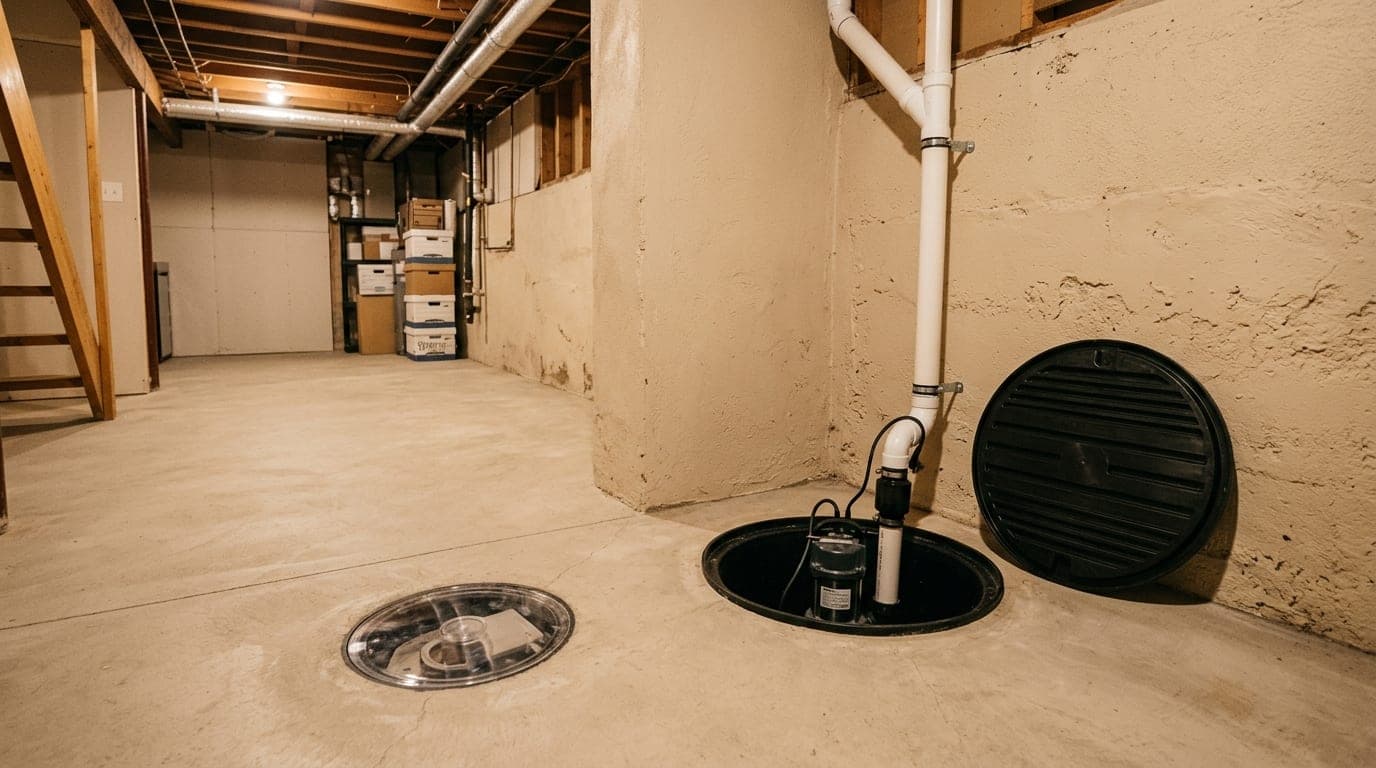
A pit and pump that collect groundwater from the foundation drains around your footing and pump it out onto the lot. The battery backup keeps it running when a storm knocks the power out, which is often exactly when it is needed.
Foundation drain severance
Many older homes had their foundation drains, the weeping tile around the footing, connected to the sewer. Severing and capping that connection, then routing the drains to a sump, keeps groundwater out of an overloaded sewer and puts you in control of it.
Where do gutters and downspouts fit?
The devices protect you from the sewer. They do nothing about the water your own roof delivers to the foundation, and that volume is bigger than most people expect. Every millimetre of rain on a square metre of roof is a litre of water, so a 25-millimetre storm on a 120-square-metre roof sends about 3,000 litres toward your downspouts.
If the eavestroughs are clogged, that water pours over the edge and soaks the soil right against the wall, and the foundation drains and sump pump end up working harder, or losing. The Insurance Bureau of Canada's flood advice includes the basics: clean and maintain eavestroughs and downspouts at least once a year, and make sure downspouts extend at least six feet from the basement wall. The City of Toronto recommends cleaning eavestroughs at least twice a year. How clogged gutters reach the basement walks through the path.
How do you apply, step by step?
- 1Confirm your downspouts are disconnected from the City's sewers, or apply for an exemption first. Without this, the application stalls.
- 2Book a home plumbing assessment to find out which devices your house actually needs.
- 3Get quotes, and check that each contractor and any sub-contractor holds a valid City of Toronto business licence before work starts (use the City's Business Licence Lookup or call 416-392-6700). For a backwater valve, get a building permit, book the inspection once it is installed, and do not cover the valve until the inspection is complete.
- 4Keep the paperwork together: each contractor's original electronic invoice, itemized (with the sump pump and battery backup listed separately) and marked as paid in full; the permit for any backwater valve; the City's Home Plumbing Assessment Form, filled in by your licensed plumber, if you had an assessment; and photos of the sump pump and its discharge pipe outside the house, if you installed one.
- 5Apply to the City within the deadline, two years from installation for work completed on or after November 12, 2025.
What does this mean for Etobicoke and older Toronto homes?
Etobicoke is a good example of why the program exists: grand older homes in The Kingsway, compact post-war bungalows in Alderwood and Long Branch, and a steady wave of rebuilds, many on streets under giant old oaks and Norway maples. Older houses are the most likely to have foundation drains tied into the sewer and the least likely to have a backwater valve, and heavy leaf loads mean the gutters overflow early in the fall if they are not cleared.
Do the free and cheap things first: disconnected downspouts, extensions that carry water well away, and gutters cleared before the fall storms. Every Gutter Gang cleaning ends with a downspout flush and a check that each spout discharges away from the house, and downspout service in Etobicoke runs on the same terms. Then let the subsidy help with the plumbing.
Sources
- City of Toronto: Basement Flooding Protection Subsidy Program
- City of Toronto: Mandatory Downspout Disconnection
- Insurance Bureau of Canada: Water damage and flood protection
Frequently asked questions
Does Toronto's basement flooding subsidy cover downspout disconnection?
No. Disconnected downspouts are a condition of the subsidy, not an item it pays for. Separately, the City's Mandatory Downspout Disconnection Financial Assistance program reimburses up to $500 for eligible low-income seniors and low-income persons with a disability, where the combined household income is $50,000 or less.
Do I need a permit for a backwater valve in Toronto?
Yes. The City requires a building permit for backwater valve installation, and the subsidy requires that the work be done by a contractor with a valid City of Toronto business licence.
Is there a deadline to apply for the subsidy?
For work completed on or after November 12, 2025, you must apply within two years of installation. For work completed before that date, the deadline is one year from installation, and the earlier subsidy limits apply.
Does the subsidy apply outside Toronto, in places like Mississauga or Vaughan?
No, it is a City of Toronto program. Other GTA municipalities run their own flood-protection programs with different rules, so check with your city directly.
Keep reading
- Toronto's downspout disconnection bylaw, explained
- What clogged gutters actually do to your foundation
- Where should your downspouts actually drain?
- Downspout services: what is included and how it works
- Downspout cleaning & unclogging in Etobicoke: local prices and booking
- Everything we do in Etobicoke: neighbourhoods, trees and services