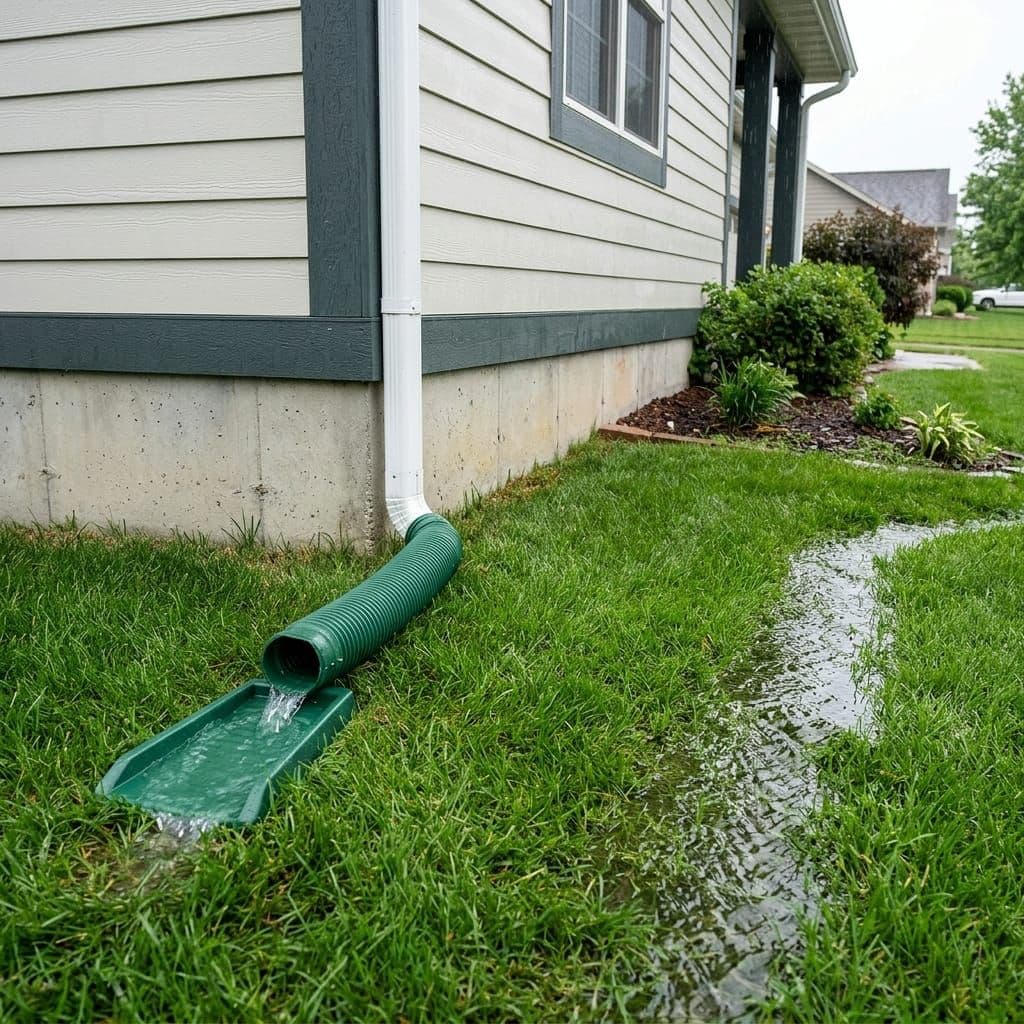
Downspouts should discharge at least 1.5 to 2 metres from the foundation, onto ground that slopes away from the house. Water dumped at the wall — the default on many homes — soaks the exact soil your basement depends on staying dry. The fix is usually a simple downspout extension, aimed correctly.
Why is 'at the wall' the default failure?
Builders terminate downspouts with a short elbow because anything longer gets in the way of construction. Decades later the elbow is still there, discharging a roof's worth of rain into the strip of soil beside the foundation. One good storm can send hundreds of litres down a single spout — concentrated in one spot, storm after storm, that is how clay soil swells, pressure builds, and basements learn to weep.
What does a correct discharge setup look like?
- Extension carrying water 1.5–2 m from the wall — further on flat lots
- A splash pad at the outlet so the stream spreads instead of drilling a hole
- Ground at the outlet sloping away from the house, not back toward it
- The outlet clear of walkways where winter discharge becomes an ice sheet
- Nothing draining toward a neighbour's foundation — water you redirect is still your water
What about downspouts connected underground?
Older homes sometimes have spouts that disappear into a pipe at grade. Some feed proper storm connections or weeping systems; many feed clay pipes that cracked decades ago and now inject water directly beside the footing. In Toronto, downspouts must be disconnected from the City's sewer system unless the City grants an exemption (here is what the bylaw asks of you) — once yours is disconnected, the above-ground extension is doing the whole job, so its aim matters. If you do not know where an underground pipe goes, treat it with suspicion until someone checks.
How do big lots change the math?
Wide homes concentrate more roof per spout. A Brampton two-storey with double-garage rooflines can drain half the house through one downspout, so that outlet placement carries real stakes — and long buried extensions on generous lots fail quietly, backing up under the lawn where nobody sees it. During every cleaning we flush each spout and check where the water actually exits; a buried run that gurgles back up is a finding, not a footnote.
The two-minute self-audit
A rain barrel is a good use of a downspout as long as its overflow is routed away, and downspout service in Brampton checks where every spout discharges on each visit.
Walk your perimeter and ask three questions at every downspout: where does the water land, which way does the ground slope there, and what happens to it in January? If any answer is 'at the wall', 'toward the house', or 'across the front steps', the fix is cheap and the crew can sort it during any visit — the flush and flow test are already included with every cleaning.
Frequently asked questions
How far should a downspout extension go from the house?
At least 1.5 to 2 metres, onto ground that slopes away from the foundation, and further on flat lots. The Insurance Bureau of Canada recommends at least six feet from the basement wall.
Can a downspout drain onto the lawn?
Yes, and a lawn that slopes away from the house is one of the best places for it. Add a splash pad so the stream spreads, and make sure the water does not run toward a neighbour's foundation.
What should I do if my downspout goes into the ground?
Find out where the pipe leads before trusting it. Old clay lines often crack and leak beside the footing, and in Toronto a sewer connection must be disconnected unless the City has granted an exemption.
Keep reading
- Toronto's downspout disconnection bylaw, explained
- How to unclog a downspout (above ground and underground)
- How to connect a rain barrel to your downspout
- Downspout services: what is included and how it works
- Downspout cleaning & unclogging in Brampton: local prices and booking
- Everything we do in Brampton: neighbourhoods, trees and services