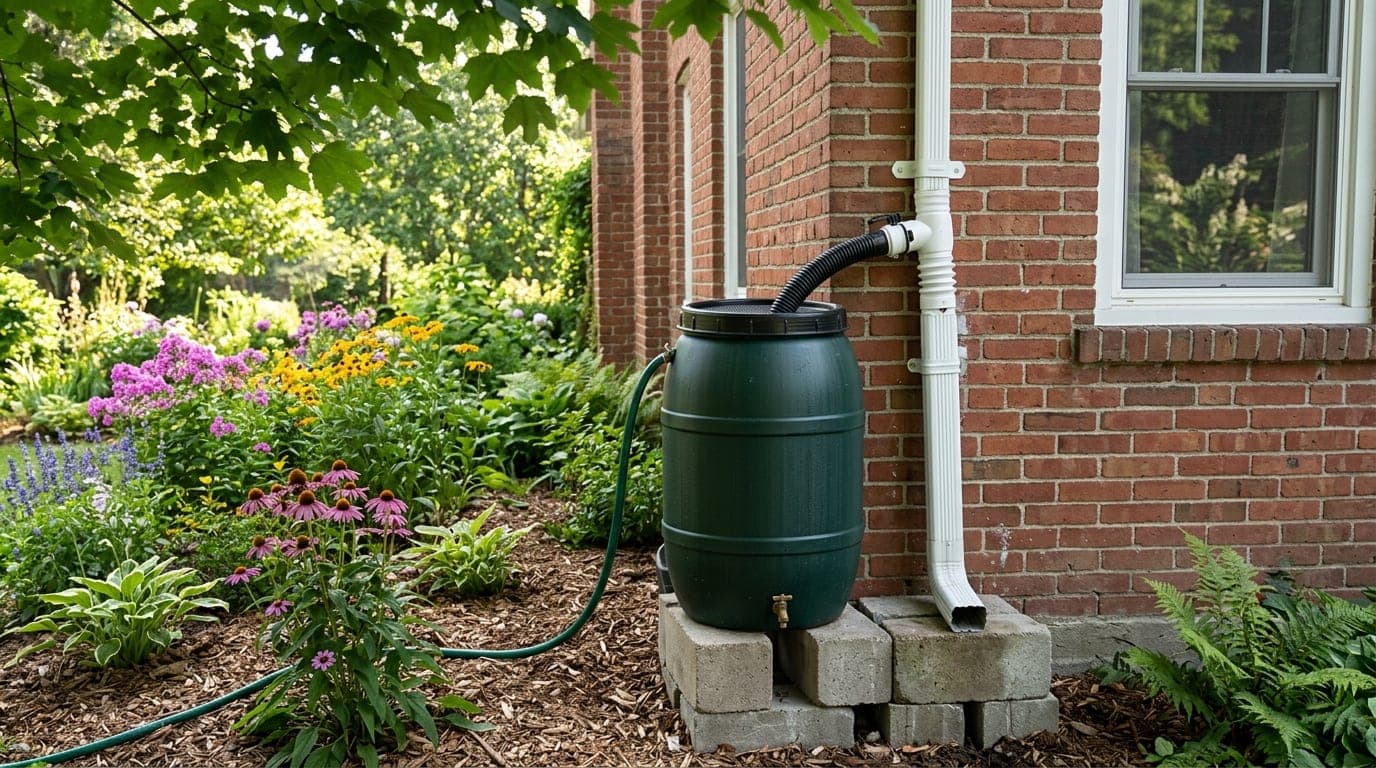
To connect a rain barrel, set it on a level, raised base beside a downspout, then fit a diverter into the spout or cut the spout and elbow it into the barrel's screened lid. Route the overflow at least 1.5 metres from the foundation, keep the lid sealed against mosquitoes, and drain and disconnect the barrel before the first freeze.
Is a rain barrel worth it?
As garden water, yes: it is free, chlorine-free and right where your beds are. As stormwater control, keep expectations modest. Every millimetre of rain on a square metre of roof produces a litre of water, so if 30 square metres of roof drains to one downspout, a 200-litre barrel is full after less than 7 millimetres of rain. In a real storm the barrel fills in minutes and everything after that has to go somewhere sensible, which is why the overflow matters as much as the barrel.
Diverter or cut-in: which connection?
| Diverter kit | Cut the downspout | |
|---|---|---|
| How it works | A fitting in the downspout sends water to the barrel through a hose | The downspout is cut above the barrel and an elbow drops water into the lid |
| When the barrel is full | Water carries on down the downspout as normal | Water leaves through the barrel's overflow |
| Winter | Close or remove the diverter; the downspout still works | You must refit the cut section and extension |
| Debris | Most diverters let leaves pass down the spout | Leaves land on the lid screen and need clearing |
| Best for | Most homes | Barrels with a large, well-routed overflow |
How do you connect it?
- 1Pick a downspout near the garden, discharging onto ground you can route overflow from.
- 2Build a raised, level base, such as solid concrete blocks or a paver pad. Raising the barrel gives the tap enough height to fill a watering can.
- 3Set the barrel on the base and mark the downspout at the height of the barrel's inlet.
- 4Install the diverter at that mark following its instructions, or cut the downspout and fit an elbow that drops into the lid screen.
- 5Connect the overflow and send it away from the house, 1.5 to 2 metres out onto ground that slopes away, or into a second barrel.
- 6Check that the lid is sealed and screened, then watch the first rain to make sure water goes where you planned.
How do you keep mosquitoes out?
Standing water is where mosquitoes breed, and an open rain barrel is a perfect site. Use a barrel with a sealed lid and fine mesh screen over every opening, check the screen for tears, and keep leaves from piling on it so the water keeps flowing in. Standing water and mosquitoes covers the rest of the yard.
What happens in winter?
A rain barrel cannot stay connected through an Ontario winter. Water freezing inside can split the barrel and the fittings, and a frozen barrel backs water up the downspout. Before the first freezing nights, usually some time in October, drain it completely, disconnect it, store it upside down or indoors, and put the downspout back to normal with its extension in place. A diverter makes this easier: close or remove it and the downspout carries on as usual.
Are rain barrels allowed where I live?
Generally, yes. In Toronto, where downspouts must be disconnected from the City's sewers, the City lists rain barrels among the options for handling disconnected downspout water, as long as the water stays on your property and away from the foundation. The Toronto bylaw has the details. Some GTA municipalities and conservation groups also run discounted rain barrel sales in spring, so check your city's website.
What about Aurora's trees?
Aurora's old core is thick with sugar maples and towering spruce, and north of Wellington the moraine edge adds oak and pine. Spruce needles and cones are hard on rain barrels: they collect on the lid screen, slow the inflow and rot into sludge. A diverter that lets debris pass down the spout, plus clean gutters feeding it, keeps the barrel water clean and the screen clear.
Every Gutter Gang cleaning ends with a downspout flush and a check that each spout discharges away from the house, and downspout service in Aurora runs on the same terms. Just tell us about the barrel when you book. In 2026 a cleaning runs $299 to $499 before HST, with before and after photos included.
Sources
- City of Toronto: Mandatory Downspout Disconnection
- City of Toronto: How to prevent basement flooding
- Ontario: Controlling mosquitoes on rural and farm properties
Frequently asked questions
How much water does a rain barrel collect?
It fills fast. Each millimetre of rain on a square metre of roof is one litre, so a roof section of 30 square metres fills a 200-litre barrel with under 7 millimetres of rain. After that, the overflow has to handle the rest.
Can a rain barrel cause basement flooding?
It can if its overflow empties next to the foundation, or if it is left connected to freeze and backs water up the downspout. Route the overflow 1.5 to 2 metres away onto ground that slopes away from the house, or use a diverter so excess water carries on down the downspout.
Do I need to take my rain barrel down in winter?
Yes. Drain it, disconnect it and store it before freezing weather, then restore the downspout and its extension. Ice can split the barrel and back water up into the downspout.
Is rain barrel water safe for vegetable gardens?
Roof runoff picks up grit, bird droppings and whatever is on the shingles, so it is not drinking water. Many gardeners water the soil rather than the leaves of edible plants with it, and wash produce as usual.
Keep reading
- Where should your downspouts actually drain?
- Toronto's downspout disconnection bylaw, explained
- Standing water in your gutters: causes and mosquito risk
- Downspout services: what is included and how it works
- Downspout cleaning & unclogging in Aurora: local prices and booking
- Everything we do in Aurora: neighbourhoods, trees and services