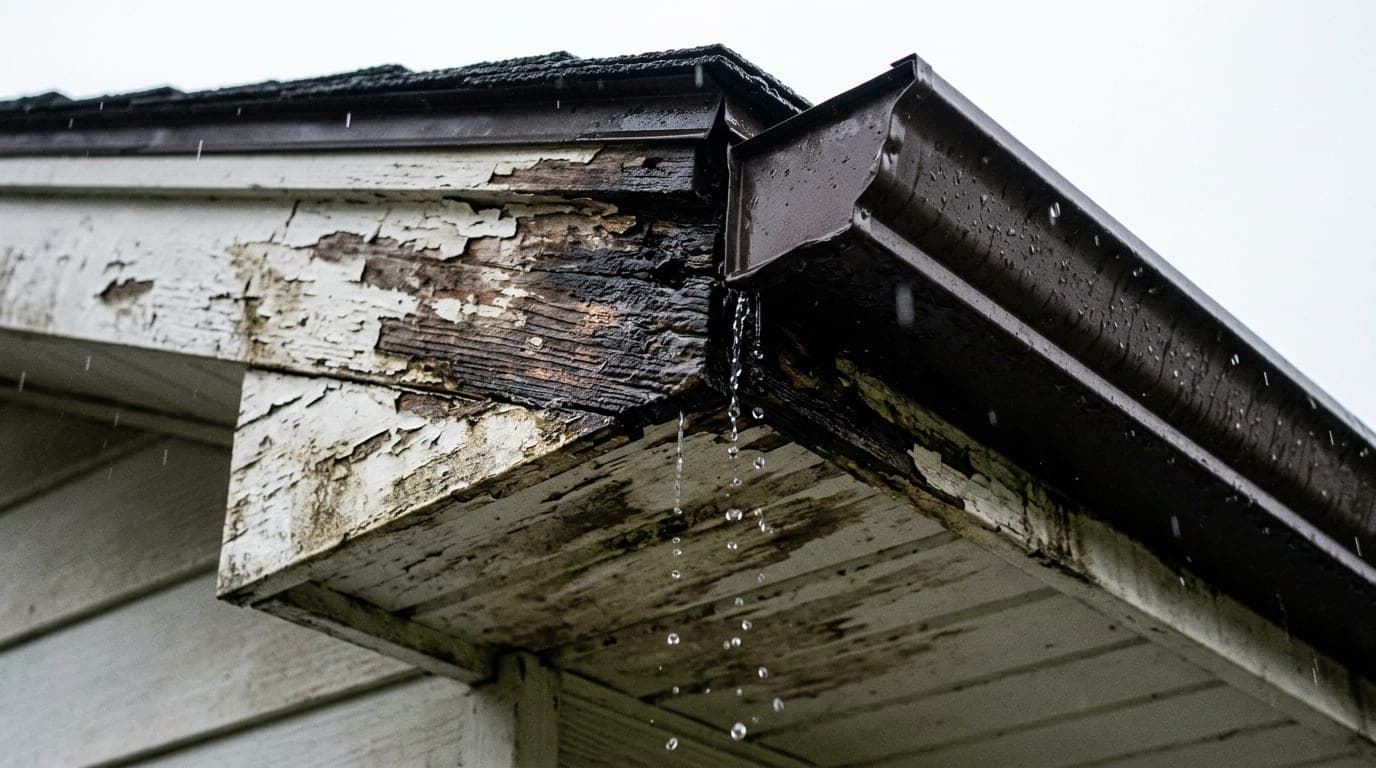
Water runs behind a gutter when the roof edge doesn't deliver it into the trough. The usual causes are a missing or short drip edge, a gutter hung too low or pulled away from the fascia, shingles that stop short of the gutter, or an overflowing clog. Left alone, it rots fascia and soffit and stains siding.
How do you know water is getting behind the gutter?
- Drips falling between the gutter and the house during rain, not over the front
- Dark streaks, stains or peeling paint on the fascia board, visible above or behind the gutter
- Soft, stained or sagging soffit panels under the eave
- Water marks or streaks on the siding or brick directly below the gutter line
- In winter, icicles forming behind the gutter instead of hanging from its front lip
What is a drip edge?
A drip edge is a strip of metal flashing along the roof edge, under the first row of shingles. Its bent lip carries water off the shingles, past the fascia and into the gutter. A gutter apron is a variant designed specifically to reach down into the back of the gutter. Without one, water running off the shingle edge can curl back under it by surface tension and run down the face of the fascia, behind the gutter.
Many older roofs in the GTA were shingled without one, and on some re-roofs the drip edge is too short to reach the gutter. Either way the result is the same: a thin sheet of water finding the gap every time it rains.
What else sends water behind the gutter?
| Cause | What it looks like | Fix |
|---|---|---|
| No drip edge or apron | Streaks down the whole fascia line | A roofer slips a gutter apron under the first course of shingles |
| Gutter hung too low | A visible gap between the roof edge and the gutter's back | Re-hang the gutter higher, tight under the drip edge |
| Gutter pulled away from the fascia | A gap that widens along the run | Re-fasten with hidden hangers into sound wood |
| Shingles stopping short | Water dripping straight down behind the gutter | A roofer extends the edge or adds an apron |
| A clogged gutter | Water backing up and over the back edge | Clean and flush; the back of the gutter is lower than you think |
That last one catches people out. On many installs the back edge of the gutter sits close to the front lip in height, so a clogged gutter can spill backward as easily as forward. If the problem only appears when the gutter is full, start with a cleaning and a downspout flush.
What damage does it cause?
The fascia takes it first: constantly wet wood rots, stops holding the gutter's fasteners, and the gutter begins to sag, which widens the gap and lets more water in. The chain continues into the soffit and, eventually, the top of the wall. In winter the same water freezes behind the gutter, prying it further from the house. The roofline guide follows the whole chain, and sagging gutters covers the repair once it gets that far.
Can you fix it without replacing the roof?
Usually. A gutter apron can be slipped under the first course of existing shingles without re-roofing, though it takes care not to crack cold shingles and is best done by a roofer in mild weather. If the gutter itself is hung too low or has pulled away, re-hanging it tight under the roof edge closes the gap. Where the fascia has already rotted, that carpentry has to come first.
Why do Burlington's hillside homes show it?
Burlington's homes climbing toward the Escarpment often have taller rear elevations, where the gutter line is high and out of sight from the yard, so water getting behind the gutter can run for a season before anyone notices the stained fascia. Down in Roseland and Aldershot, mature homes that have been re-roofed over the years sometimes have drip edges that no longer reach the gutter.
Our crews check for loose hangers and leaks on every cleaning, and gutter repair in Burlington covers re-fastening pulled hangers and re-levelling short runs, from $89, priced on site and approved before work starts. Drip edge and apron work belongs to a roofer, and fascia replacement to a carpenter; if that is what you need, we will tell you and show you in the photos.
Frequently asked questions
Why is water coming out from behind my gutter?
Most often the roof edge has no drip edge or gutter apron, so water curls under the shingles and runs down the fascia behind the gutter. A gutter hung too low, pulled away from the wall or overflowing backward from a clog can do the same.
Can a drip edge be added without re-roofing?
Often, yes. A gutter apron can usually be slipped under the first course of shingles on an existing roof. It is best done by a roofer in mild weather so the shingles do not crack.
Should the gutter touch the shingles?
Not quite. The gutter's back should sit tight against the fascia just below the drip edge, so the flashing carries water into the trough. The shingles typically overhang the drip edge slightly; they do not rest on the gutter.
Why is my fascia rotting behind the gutter?
Because water is reaching it: from a missing drip edge, a gap behind the gutter, or overflow out the back of a clogged run. Once the fascia softens, fasteners loosen and the gap widens, so the cause needs fixing along with the wood.
Keep reading
- Fascia, soffit, eavestrough: know your roofline
- Sagging gutters pulling away from the house: why and fixes
- Why your gutters overflow even when they're clean
- Gutter repair: what is included and how it works
- Eavestrough & gutter repair in Burlington: local prices and booking
- Everything we do in Burlington: neighbourhoods, trees and services