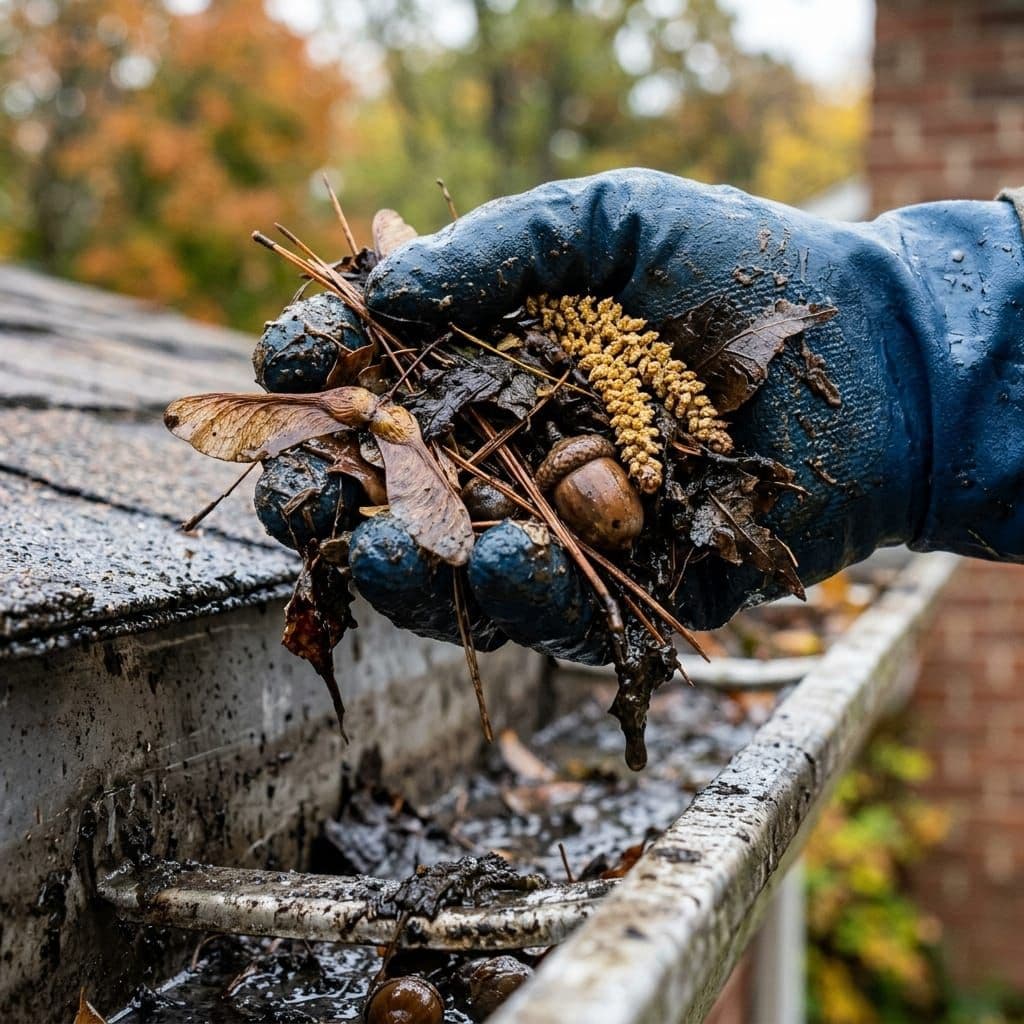
GTA gutters fill on a schedule set by the trees above them: maple keys in June, oak catkins in spring, leaves from late September, acorns through fall, and conifer needles year-round. Knowing what stands over your roof tells you when to clean and whether once a season is enough.
The maple problem: keys in June, leaves in October
Maples — Norway, silver, sugar — dominate the GTA's older streets, and they bill you twice. Late spring brings the keys: winged seeds that helicopter down by the thousand, mat in the trough, and famously sprout there. Then October delivers one of the heaviest leaf drops of any species. Maple streets, from Toronto's High Park to Scarborough's Wexford, are the reason the two-clean year exists: late spring after the keys, late fall after the leaves.
The oak problem: it drops everything, late
Oaks are the full-service gutter antagonist. Spring: catkins, stringy pollen tassels that tangle into wads and slip through guard slots. Fall: acorns, purpose-built to wedge in downspout elbows, plus leathery leaves that decompose slowly and pack dense. And oaks hold their leaves later than maples — on oak streets in Old Oakville or The Kingsway, a late-October clean is premature; those runs are not done until mid-to-late November.
Quick reference: what is over your roof?
| Tree | Drops | Peak timing | Gutter verdict |
|---|---|---|---|
| Maple | Keys, heavy leaf load | June + October | Two cleans a year, minimum |
| Oak | Catkins, acorns, dense leaves | Spring + late Oct–Nov | Book the fall clean late |
| Pine / spruce | Needles, cones | Year-round, worst after wind | Fine mesh guards or twice-yearly hand-clears |
| Willow | Fine whips, narrow leaves | All season | Wraps in elbows — flush every visit |
| Honey locust | Tiny leaflets, seed pods | Fall | Slips through coarse screens |
| Linden | Bracted seeds, leaves | Summer + fall | Steady load as street trees mature |
Why does the mix matter more than the volume?
Because different debris fails differently. Leaves block the trough where you can see them; needles felt into a layer that sheds water invisibly; acorns and keys travel down and block the elbow where nobody looks. A cleaning tuned to your street's mix — hand-clearing for felt, a hard flush for elbow-packers, a late date for oak streets — lasts a season. A generic one lasts until the next windy week.
Two tree-driven problems have their own guides, pine needles and ravine lots, and gutter cleaning in Oakville is timed for the oak streets that drop last.
Stand in the driveway and look up: whatever you see over the roofline is your maintenance calendar. If it is maples, book June and late October. If it is oaks, push the fall visit late. If it is conifers, read our pine needle guide next — needles play by their own rules entirely.
Frequently asked questions
When do maple keys fall in the GTA?
In late spring, usually late May into June. They spin down by the thousand, mat in the gutter and sprout in the wet debris, which is why a separate late-spring cleaning exists.
Why do seedlings grow in my gutters?
Maple keys and other seeds land in the wet layer of debris at the bottom of the trough and germinate there. A gutter with plants growing in it has been holding water and debris for a while.
Which trees are hardest on gutters?
Pines and spruces, because their needles shed year-round and felt into a mat, and oaks, because they drop catkins, acorns and dense leaves late in the season. Maples bring the biggest single loads.
Keep reading
- Pine needles and gutters: why conifer lots are different
- Why ravine and valley lots fill gutters faster
- When to clean your eavestroughs in Toronto
- Gutter & eavestrough cleaning: what is included and how it works
- Gutter & eavestrough cleaning in Oakville: local prices and booking
- Everything we do in Oakville: neighbourhoods, trees and services