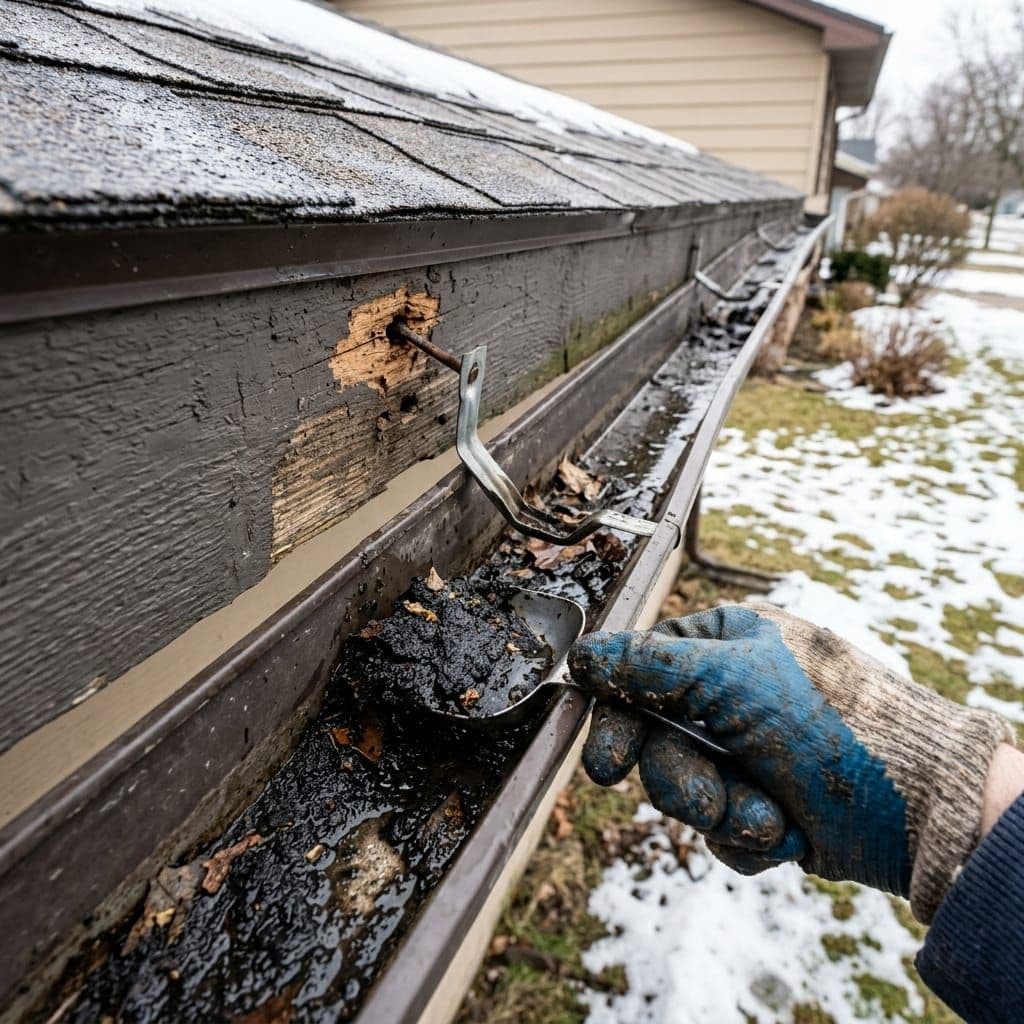
After an Ontario winter, check seven things: sagging runs, pulled hangers, opened seams, downspout flow, granule sludge, fascia stains, and grading erosion below the gutters. Freeze-thaw does mechanical damage leaves never do — spring is when you catch it while it is still a minor repair.
Why is winter harder on gutters than fall?
Fall fills gutters; winter bends them. Water trapped in a clogged trough freezes and expands with enough force to open seams and lever fasteners out of the fascia. Snow sliding off the roof loads the outer edge. Ice dams pry at the exact line where gutter meets roof. A system that went into December blocked comes out of March carrying damage — usually small, usually fixable, usually invisible from the couch.
The seven-point spring check
- 1. Sight down each run from the corner — a straight gutter has a barely-visible slope; a winter sag reads as a belly
- 2. Look for hangers or spikes standing proud of the fascia, or gaps between gutter and board
- 3. Watch seams and end caps during the first spring rain — winter opens joints that looked fine in November
- 4. Confirm every downspout pushes water out the bottom; ice can shift elbows and split seams from inside
- 5. Check for shingle granule sludge — a gritty black layer that washes down after winter and narrows the channel
- 6. Scan fascia and soffit for new stains, peeling paint, or soft spots — evidence water got behind the system
- 7. Walk the foundation line for trenching, splash marks, or washed-out mulch under any gutter run
Which findings are DIY and which need a pro?
| Finding | Meaning | Action |
|---|---|---|
| Granule sludge, seed debris | Normal winter aftermath | Spring cleaning handles it |
| One pulled hanger, small drip at a seam | Minor mechanical damage | Repair from $89, priced on site |
| A visible belly in a long run | Lost pitch — water pools mid-span | Re-levelling, same visit as a clean |
| Soft fascia, paint bubbling | Water behind the gutter for months | Repair assessment before it spreads |
| Gutter pulling away along a whole side | Fastening failing system-wide | Honest assessment — repair vs replace |
When should the spring cleaning happen?
Late May into June, after the maple keys and blossoms drop — clean earlier and the seed shower refills the troughs in a fortnight. Burlington's hillside homes deserve one extra step: check the tall rear elevations too, because the run nobody can see from the street is the one that carries winter damage the longest. The two-visit rhythm — spring plus late fall — is exactly what the Crew Plan schedules, at 15% off each visit.
Two winter injuries have their own guides, sagging gutters and leaking seams and corners, and gutter repair in Burlington handles both in the same visit as a spring clean.
Run the checklist on the first decent weekend. Anything on the repair list gets priced on site before we touch it — and if winter was kind and it is just sludge and seeds, the spring clean puts the whole system back to zero with photos to prove it.
Frequently asked questions
When should gutters be cleaned in spring in Ontario?
Late May into June, after the maple keys and blossoms have dropped. Cleaning in April is fine for a winter damage check, but the seed shower will refill the troughs within weeks.
What damage does winter do to gutters?
Ice expands in clogged troughs and opens seams, the weight of ice and snow pulls hangers out of the fascia, and runs sag where the load was heaviest. Most of it is small and fixable if caught in spring.
Should I check my gutters as soon as the snow melts?
A quick look from the ground is worth it: look for sags, gaps behind the gutter and downspouts knocked loose. Save the full cleaning for late spring, after the trees have finished dropping.
Keep reading
- Sagging gutters pulling away from the house: why and fixes
- Why gutters leak at the seams and corners
- Frozen gutters and downspouts: what to do this winter
- Gutter repair: what is included and how it works
- Eavestrough & gutter repair in Burlington: local prices and booking
- Everything we do in Burlington: neighbourhoods, trees and services