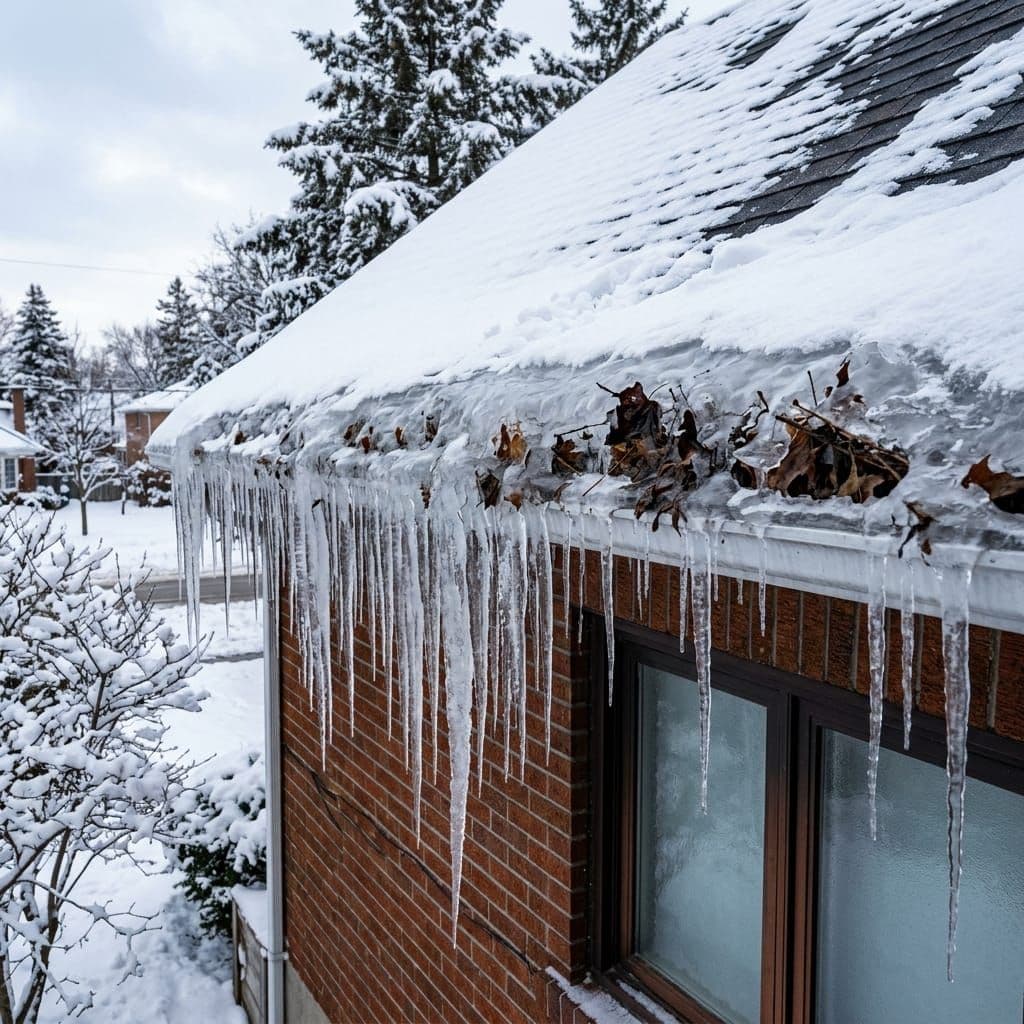
Skip the fall cleaning and the leaves you left become the base of an ice dam: a frozen ridge at the roof edge that traps meltwater behind it. That water backs up under the shingles, into fascia, walls, and ceilings. The prevention is a cleaning; the repair is drywall, insulation, and sometimes the roof itself.
How does a leaf-filled gutter become an ice dam?
- Wet leaves left in the trough freeze into a solid base at the coldest part of the roofline
- Heat escaping your attic melts the snow higher up the roof, and meltwater runs down toward the eaves
- The water hits the frozen edge, refreezes, and the ridge grows with every melt-freeze cycle
- Water pooling behind the ridge has nowhere to go but up — under shingles and into the house
Why is the gutter the starting point?
A clear, draining eavestrough gives meltwater an exit at exactly the spot where dams start. A clogged one does the opposite: it holds a reservoir of frozen debris and water at the eaves, pre-building the dam's foundation before winter even starts. Blocked downspouts make it worse — even a clean trough cannot drain through a spout that froze solid around an October clog.
What does ice dam damage actually cost?
The damage list reads like a renovation quote: stained ceilings, soaked attic insulation that loses its R-value, rotted fascia and roof deck, and in bad years interior wall damage with mould risk behind it. Set that against the 2026 price of the prevention — $299 to $499 for a full cleaning with every downspout flushed — and the fall clean is the cheapest winter insurance a GTA home can buy.
When should the last cleaning of the year happen?
After the main leaf drop and before the hard freeze — in most of the GTA that means late October to mid-November, and closer to late November under oaks, which drop last. On heavily treed lots in Vaughan's valley neighbourhoods or under Toronto's old maples, the two-clean rhythm matters: a mid-fall pass so the troughs never pack solid, then the final clear once the trees are bare.
Do heated cables or roof raking replace the cleaning?
No — they attack the symptoms. Cables melt channels through a dam that a clear gutter system would have prevented, and raking removes the snow fuel but not the blocked drain. Attic insulation and ventilation fix the heat-loss half of the equation, and they are worth doing. But every version of ice-dam prevention starts with the same first step: give meltwater somewhere to go.
If ice arrives anyway, frozen gutters and downspouts covers what is safe to do in the moment, and gutter cleaning in Vaughan books fall visits right up until the weather closes the window.
The crew books fall slots into November until the weather calls it. If your gutters are still holding last year's leaves, get the price now and go into winter with a drain instead of an ice tray.
Frequently asked questions
Are icicles on gutters a sign of an ice dam?
Often. Large icicles mean meltwater is running off the roof and refreezing at the edge, which is how dams form. A thick ridge of ice along the eave, with water stains inside, confirms it.
Can I remove an ice dam myself?
Not safely with a hammer or on an icy ladder. From the ground, a roof rake can pull fresh snow off the lowest metre of roof. Removing a built-up dam is work for a roofer with steam equipment.
Does home insurance cover ice dam damage?
It depends on the insurer and the policy. The Insurance Bureau of Canada notes that ongoing or repeated damage is treated as a maintenance issue and may not be covered. Insurance and clogged gutters.
Keep reading
- Frozen gutters and downspouts: what to do this winter
- Heat cables for gutters: worth it in Ontario?
- The GTA fall exterior checklist: 10 jobs before the freeze
- Gutter & eavestrough cleaning: what is included and how it works
- Gutter & eavestrough cleaning in Vaughan: local prices and booking
- Everything we do in Vaughan: neighbourhoods, trees and services