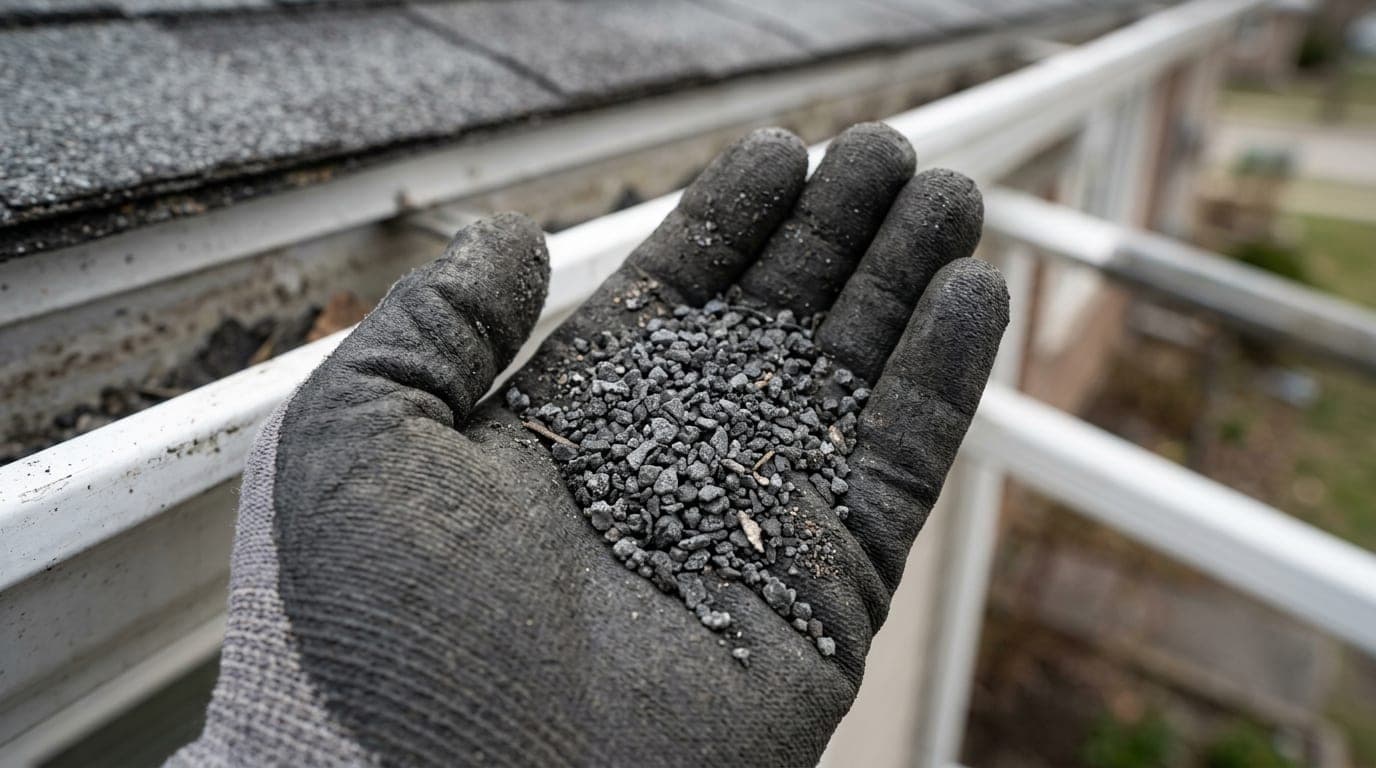
Some granules in your gutters are normal: new asphalt shingles shed loose surplus granules for the first year or so, and every roof loses a little in storms. Heavy, steady amounts on an older roof, visible bald patches, or a sudden load after hail usually mean the shingles are wearing out or damaged, and a roofer should look.
What are shingle granules for?
An asphalt shingle is a mat soaked in asphalt, and asphalt breaks down in sunlight. The coloured mineral granules pressed into its surface shield it from UV, give the roof its colour and add some fire resistance. As long as the granules stay put, the shingle underneath ages slowly. When they wash away, the asphalt is exposed and deteriorates much faster.
How much is normal?
| What you find | Roof age | What it usually means |
|---|---|---|
| A light layer of grit with the leaves | Any | Normal wear and weather |
| Noticeable granules, even in the first spring | New roof, first months | Loose surplus granules shedding off; normal |
| A sudden heavy load after a storm | Any | Possible hail or wind damage; have it checked |
| Heavier every visit, sediment piling at outlets | Older roof | Shingles wearing out; budget for a roof |
| Bare, dark patches visible on the shingles | Older roof | Granule loss exposing asphalt; get a roofer's opinion |
In an Ontario climate, asphalt shingle roofs commonly last somewhere around 15 to 25 years, depending on the product, the ventilation under them and how much shade and debris they live with. A roof in the back half of that range that is filling the gutters with grit is telling you its timeline.
How can you check without climbing on the roof?
- Look at the splash pads and ground at the bottom of each downspout after rain: a fan of dark sand means granules are moving.
- Scan the roof from across the street with binoculars for patches darker than the rest, curling edges or missing tabs.
- Check the gutter sediment when the gutters are cleaned: grey-black grit versus leaf mould tells you what the roof is shedding.
- Compare over time. Photos from each cleaning show whether the grit is steady or growing.
What do granules do to your gutters?
Mixed with water, granules behave like wet sand. They settle in the bottom of the trough, add weight that works hangers loose, and slide down to the outlets where they pack elbows hard. A leaf blower moves leaves but leaves the sand behind, which is why granule-heavy gutters need hand-scooping and a proper flush. How to unclog a downspout covers the packed elbows.
What about granules after hail?
Hail knocks granules loose where it strikes, leaving dark bruises on the shingles and a sudden load of grit in the gutters. If you notice a lot of granules after a hailstorm, photograph the gutters, the downspout outlets and the roof from the ground, and have a roofer inspect it. Storm damage is the kind of sudden event home insurance is more likely to consider. Insurance and gutters covers the basics.
Why is Pickering seeing more of it?
A lot of Pickering's housing is 1970s and 80s two-storeys around Liverpool and Amberlea, along with bungalows in Bay Ridges, and many of those houses are well into their second or third roof. Lakefront wind drives debris onto south-facing slopes and into their gutters, and the Rouge and Petticoat Creek corridors add oak and maple. That mix of ageing shingles and heavy debris is exactly where granule sediment builds up.
A cleaning scoops the sediment, flushes the spouts, and the before and after photos give you a visit-by-visit record of what your roof is shedding. Roof debris removal in Pickering adds a gentle blow-off of leaves and grit from the roof surface and valleys, a $59 add-on to a cleaning that runs $299 to $499 before HST for most homes.
Frequently asked questions
Is it bad to have shingle granules in my gutters?
A little is normal, especially on a new roof or after a storm. A steady, growing amount on an older roof, or bald patches visible on the shingles, suggests the roof is wearing out and should be looked at by a roofer.
How long do new shingles shed granules?
New asphalt shingles commonly shed loose surplus granules for the first several months to a year. After that the loss should drop to a light, steady trickle.
Does hail damage show up as granules in the gutters?
Often, yes. Hail knocks granules loose where it hits, so a sudden load in the gutters after a hailstorm is a reason to photograph everything and have the roof inspected.
Can a leaf blower clear granules from gutters?
Not well. Granules mixed with water settle like wet sand in the bottom of the trough and pack into elbows. They need to be scooped out by hand and the downspouts flushed.
Keep reading
- Should you blow the leaves off your roof?
- Moss on your roof and gutters: GTA causes and safe removal
- Does home insurance cover damage from clogged gutters?
- Roof debris removal: what is included and how it works
- Roof debris removal in Pickering: local prices and booking
- Everything we do in Pickering: neighbourhoods, trees and services