In an Ontario climate, seamless aluminum is the practical default and typically lasts 20 to 30 years. Galvanized steel is stronger but rusts sooner, often around 20 years. Copper can last 50 years or more at several times the price. Vinyl is cheapest but turns brittle in deep cold. Maintenance often decides lifespan more than material.
How do the materials compare?
| Material | Typical lifespan | Strengths | Weak spots in Ontario |
|---|---|---|---|
| Aluminum (seamless) | 20 to 30 years | Light, won't rust, formed on site, many colours | Dents from ladders, ice and falling branches |
| Galvanized steel | Around 20 years | Strong, resists dents and heavy ice | Rusts at scratches, seams and standing water; heavy |
| Copper | 50 years or more | Very long life, no paint, heritage appearance | High cost; galvanic corrosion if mixed with other metals |
| Vinyl | 10 to 20 years | Cheap, DIY sections, won't rust | Brittle in deep cold, fades, many joints |
Treat those lifespans as typical ranges, not promises. The same material can fail in ten years on a neglected, shaded lot or outlast its range on a house where the gutters are kept clean and draining.
Why is aluminum the GTA default?
It hits the balance: it does not rust, it is light enough to hang well on a fascia, and it can be roll-formed on site into seamless runs in dozens of colours. Its weakness is denting. A ladder leaned on the lip, a heavy ice load or a falling branch leaves a mark. Heavier-gauge aluminum resists that better, and on snowy, treed lots the thicker option is usually worth asking for. Seamless vs sectional covers the forming side.
Is steel better for heavy snow?
Steel is tougher, and it shrugs off ice loads and ladder contact that would dent aluminum. The trade-off is rust. Galvanized steel is protected by its zinc coating, and once that coating is scratched, worn by grit or sitting under standing water, rust starts, usually at seams and in low spots. Steel gutters on a well-maintained house with good slope can do well; on a house where water sits in the trough, they fail from the inside.
Is copper worth the price?
For some houses, yes. Copper gutters can last half a century or more, need no paint, and weather to the brown and eventually green patina that suits stone, heritage and high-end homes. The cost is several times that of aluminum. One rule matters: copper must be fastened and connected with copper or compatible fittings. Copper touching aluminum or galvanized steel with water present causes galvanic corrosion, eating the less noble metal.
What about vinyl?
Vinyl is inexpensive, easy to cut and install in sections, and never rusts. In an Ontario winter, though, it can become brittle and crack under ice or a leaned ladder, and it expands and contracts a lot with temperature, stressing every joint. It is a reasonable choice for a garage or shed and a weaker one for the main roof.
What makes gutters fail early?
- Standing water, from clogs or lost slope, which corrodes steel and breaks down seams. Standing water explained.
- Wet debris packed in the trough, holding moisture against the metal and the fascia behind it
- Ice, prying hangers loose and splitting seams
- Ladders leaned on the lip, bending it and kinking the run
- Dissimilar metals in contact, especially copper with aluminum or steel
When a run shows rust-through, split seams or many joints failing at once, it is near the end. Repair or replace helps you decide.
What about King City estates?
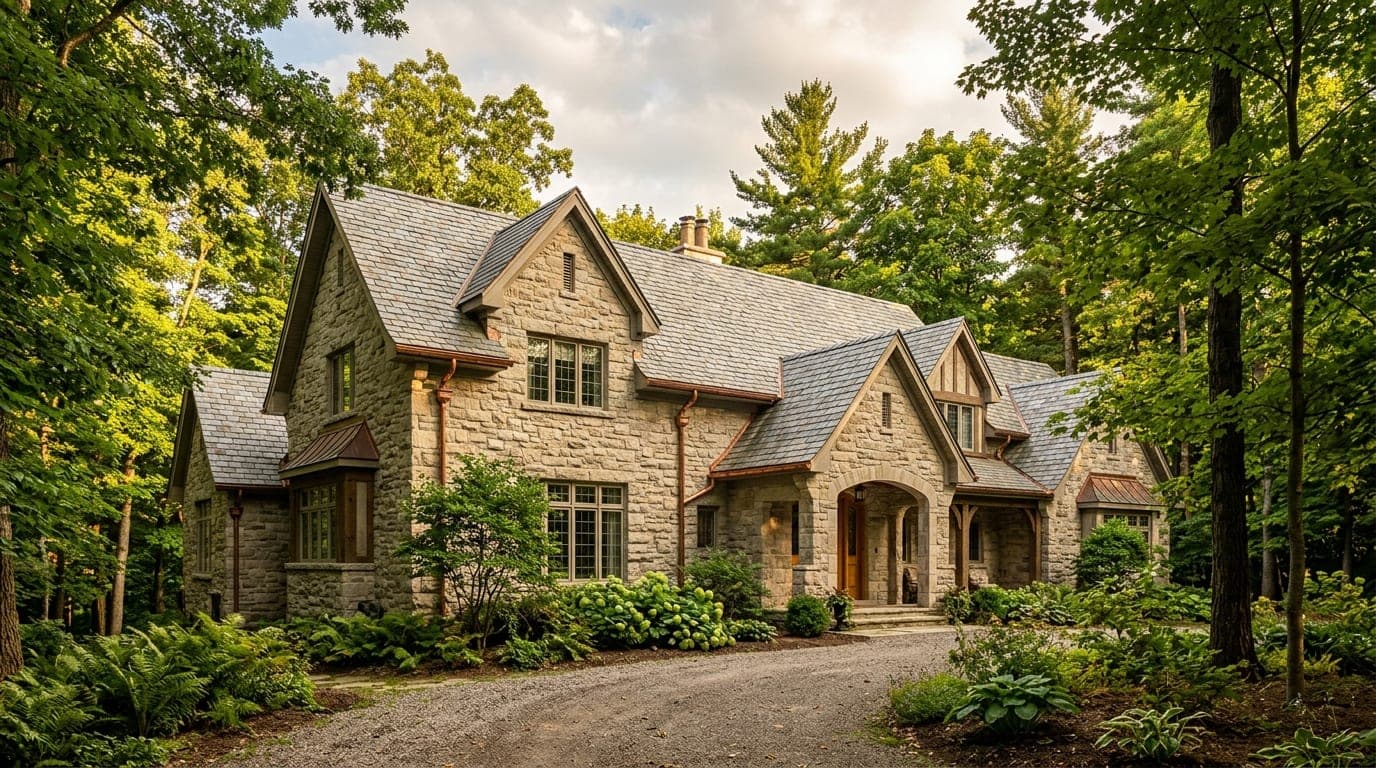
King City's estate homes and country properties carry long eavestrough perimeters under moraine forest, with mature oak, maple and white pine on the lot itself. Debris arrives from every direction all season, and pine needle mats hold moisture for weeks. That is the environment where maintenance decides lifespan: the same gutter lasts far longer when it is cleared on a steady rhythm. You will also see copper on some estate homes, where the no-paint, long-life trade-off makes sense.
We clean and make minor repairs on every material, and full replacement is left to an eavestrough installer. Gutter repair in King City covers refastening, resealing joints and re-levelling short runs, from $89, priced on site and approved before work begins.
Frequently asked questions
How long do eavestroughs last in Ontario?
Seamless aluminum typically lasts 20 to 30 years, galvanized steel around 20, vinyl 10 to 20 and copper 50 or more. Maintenance shifts those numbers a lot: gutters that hold water and debris fail years early.
What is the best gutter material for snow and ice?
Steel and heavier-gauge aluminum resist ice loads and denting best, and copper is very durable. Whatever the material, close hanger spacing and gutters that drain completely before the freeze matter more than the metal.
Can copper gutters be mixed with aluminum or steel?
No. Copper in contact with aluminum or galvanized steel, with water present, causes galvanic corrosion that eats the other metal. Copper systems need copper or compatible fasteners and fittings throughout.
Do aluminum gutters rust?
No, aluminum does not rust. It can corrode slowly in some conditions and the paint can fade or chalk, but its main weakness is denting rather than rust.
Keep reading
- Seamless vs sectional eavestroughs: what's the difference?
- Gutter repair or replacement: how to tell which you need
- 5-inch or 6-inch gutters? Sizing eavestroughs in Ontario
- Gutter repair: what is included and how it works
- Eavestrough & gutter repair in King City: local prices and booking
- Everything we do in King City: neighbourhoods, trees and services