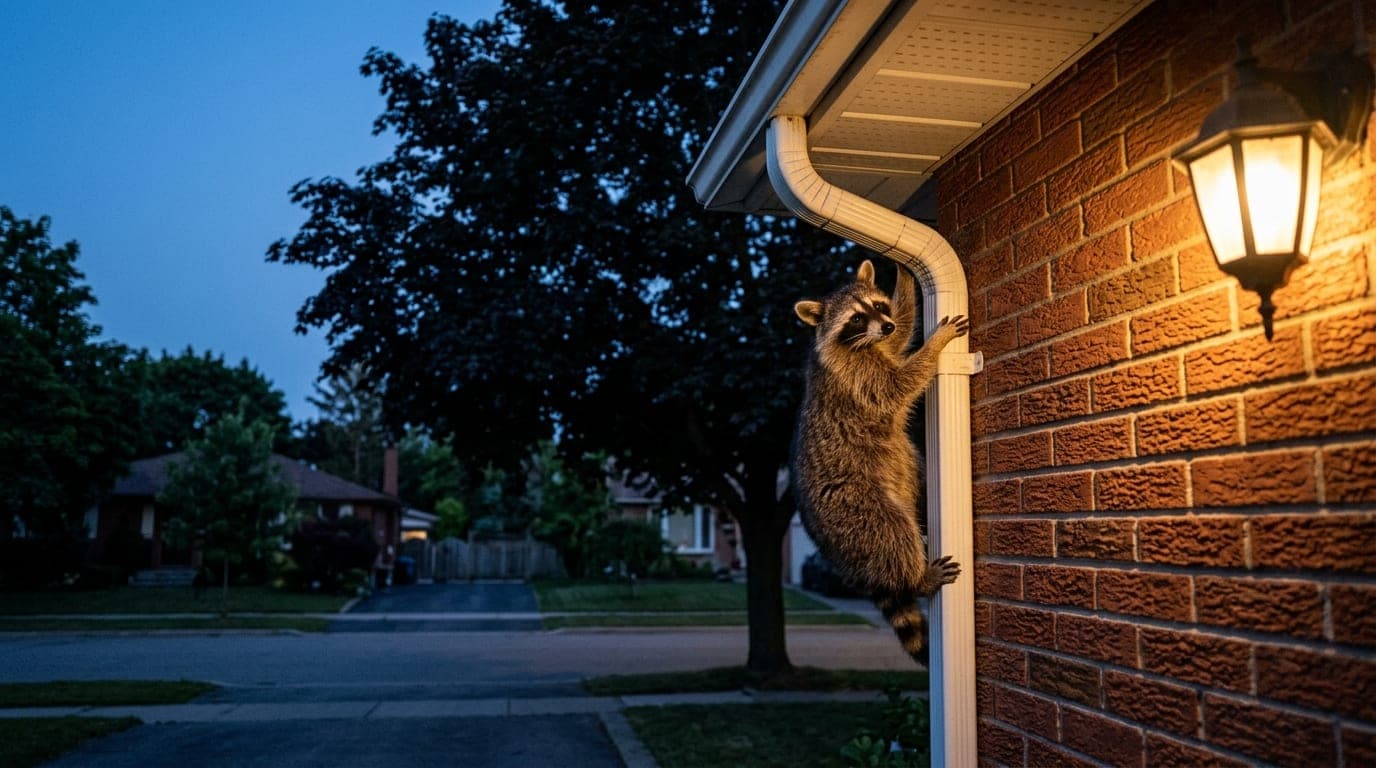
Animals use eavestroughs as highways, pantries and nest sites. Raccoons climb downspouts and pull gutters loose on their way to the roof, squirrels cache nuts and seeds in the trough, and birds nest in downspout outlets. The fixes are physical: clear the food and nesting material, block the access routes, and repair what they bent.
Why do animals like gutters so much?
A full eavestrough offers everything a small animal wants: shelter from wind, standing water, a layer of seeds and insects, and a sheltered route along the edge of the roof. A downspout is a ready-made ladder to all of it. That is why the most effective wildlife fix is also the most boring one: a clean gutter holds far less to come for.
Raccoons: the downspout climbers
Toronto's raccoons are famous for a reason. They are strong, clever climbers, and a downspout strapped to a brick corner is an easy route to the roof. At the top they grab the gutter lip to haul themselves over, and over time that bends the lip down, pops hangers and can pull a section away from the fascia. From the roof they look for a way into the attic, often through a soft spot in the soffit.
- A dented or flattened gutter lip at one spot, usually near a downspout, a fence or an overhanging branch
- Muddy paw prints on the downspout or siding
- Torn soffit panels or a gap at the roof edge above the gutter
- Noise in the attic at dusk or before dawn
Keep them off the roof by removing the ladders: trim branches back so they do not overhang the roof, and consider a climbing guard on the downspout they use. Keep green bins latched, since food draws them to the house in the first place. If an animal is already in the attic, call a wildlife control company; in spring and early summer there may be young inside, and a sealed entry can trap them.
Squirrels: caching in the trough
Squirrels use gutters as storage, especially in fall. Acorns, walnuts and seeds tucked into the leaf layer rot in the wet or sprout in spring, and the shells and husks wash down to the outlet with the next rain. Squirrels also chew, and a gnawed gutter lip or soffit edge near a tree they use is common. Keeping branches trimmed back from the roofline takes away their launch points.
Birds: nests in the downspout
Sparrows, starlings and robins all use gutters. A nest built into the outlet, or in the top elbow of a downspout, blocks it completely, so the first heavy rain after nesting season often brings a sudden overflow at one corner. Clearing a downspout clog covers the fix once the nest is empty.
Wasps: the one to leave alone
In summer, paper wasps often build under the gutter lip or on the fascia just behind it. On a ladder, that is a genuinely dangerous discovery, because a sting at height can cause a fall. If you spot a nest near the gutters, have it dealt with before anyone climbs, and mention it when you book a cleaning.
What does Ontario law allow?
Ontario lets property owners deal with wild animals damaging their property, with rules. The key one for homeowners: if you capture a live animal, you must release it within 1 kilometre of where you caught it, so it stays within reach of its food and den sites. Driving a raccoon to a far-off ravine is not allowed. Many homeowners find it easier to hire a wildlife removal business, which can capture and release under the same rules. The province's guidance is linked below.
How do you keep animals out for good?
- Keep the gutters clean, especially going into fall, when caching and winter shelter-seeking peak.
- Trim branches so none overhang the roof, cutting off squirrel and raccoon routes.
- Fit outlet strainers or downspout guards where birds nest, and empty them.
- Consider gutter guards: micro-mesh in particular stops caching and nesting in the trough.
- Repair bent sections and loose hangers promptly, before the next animal uses the weak spot.
Why is North York such a wildlife corridor?
North York's ravines, from the Don Valley branches to the lots backing onto them in Bayview Village and York Mills, are natural highways for raccoons, squirrels and birds. Ravine-backing homes see more of all three, and more debris to shelter them: oak and ash on top of the silver and Norway maples that line the older streets.
A good guard fitted to your roof and gutter profile takes away the trough as food store and nest site; gutter guards in North York are quoted on site after we look at your roof and trees. Bent lips and pulled hangers are routine repairs, from $89, priced on site and approved before work starts.
Sources
Frequently asked questions
Can raccoons damage gutters?
Yes. Raccoons climb downspouts and grab the gutter lip to reach the roof, which bends the lip, loosens hangers and can pull sections away from the fascia. The damage usually shows at one spot near their route up.
Is it legal to trap and relocate a raccoon in Ontario?
Property owners can capture wildlife that is damaging their property, but a live-captured animal must be released within 1 kilometre of where it was caught. Relocating it further away is not allowed.
How do I stop birds nesting in my downspout?
Once any nest is empty, clear the outlet and fit a strainer or downspout guard at the top. Keeping the gutter clean removes most of the nesting material birds look for.
Do gutter guards keep squirrels out?
Sturdy guards, especially micro-mesh, stop squirrels caching food in the trough. They do not stop squirrels running along the roof, so trimming overhanging branches still matters.
Keep reading
- Gutter guards in the GTA: worth it or not?
- How to unclog a downspout (above ground and underground)
- Fascia, soffit, eavestrough: know your roofline
- Gutter guard installation: what is included and how it works
- Gutter guards & eavestrough covers in North York: local prices and booking
- Everything we do in North York: neighbourhoods, trees and services